
Last Updated: November 10, 2026
Quick Summary
Professional help with VAT compliance makes sense once your sales, cross-border activity or registration status become complicated. Non-EU sellers and dropshippers often benefit most from a professional review before their first EU sale.
- Registration thresholds depend on the type of supply and where the customer is based, not only turnover.
- Get a professional review before your first EU sale if you are not established in the EU.
- Keep one shared calendar marking every filing and payment deadline, reviewed monthly.
- Describe your sales model, customer locations and existing VAT number before seeking help.
- Ask providers which tasks are included and who is responsible if a filing is wrong.
Table of Contents
- When Professional Help With VAT Compliance Makes Sense
- What a VAT Compliance Checklist and Filing Deadlines Look Like
- Starting Work With a VAT Accountant or Ecstacybliss
- Frequently Asked Questions
When Professional Help With VAT Compliance Makes Sense
Professional help with VAT compliance is worth considering once your sales, cross-border activity or registration status start to get complicated. Ecstacybliss provides end-to-end support for non-EU entrepreneurs and online sellers who want to launch and manage a business in the EU market, including company formation and VAT registration.
Many businesses find that the rules are easy to misread on a first pass. Find out whether you need an accountant for dropshipping. A common mistake is assuming registration is only needed after a large turnover figure, when the threshold depends on the type of supply and where the customer is based.
Getting a professional review before your first EU sale is a sensible step if you are not established in the EU, particularly for dropshippers and cross-border sellers. Read the complete guide to EU VAT registration for non-EU residents.
What a VAT Compliance Checklist and Filing Deadlines Look Like
A VAT compliance checklist keeps the recurring duties visible. It usually covers registration status, invoice requirements, record-keeping and the return and payment dates set by Revenue.
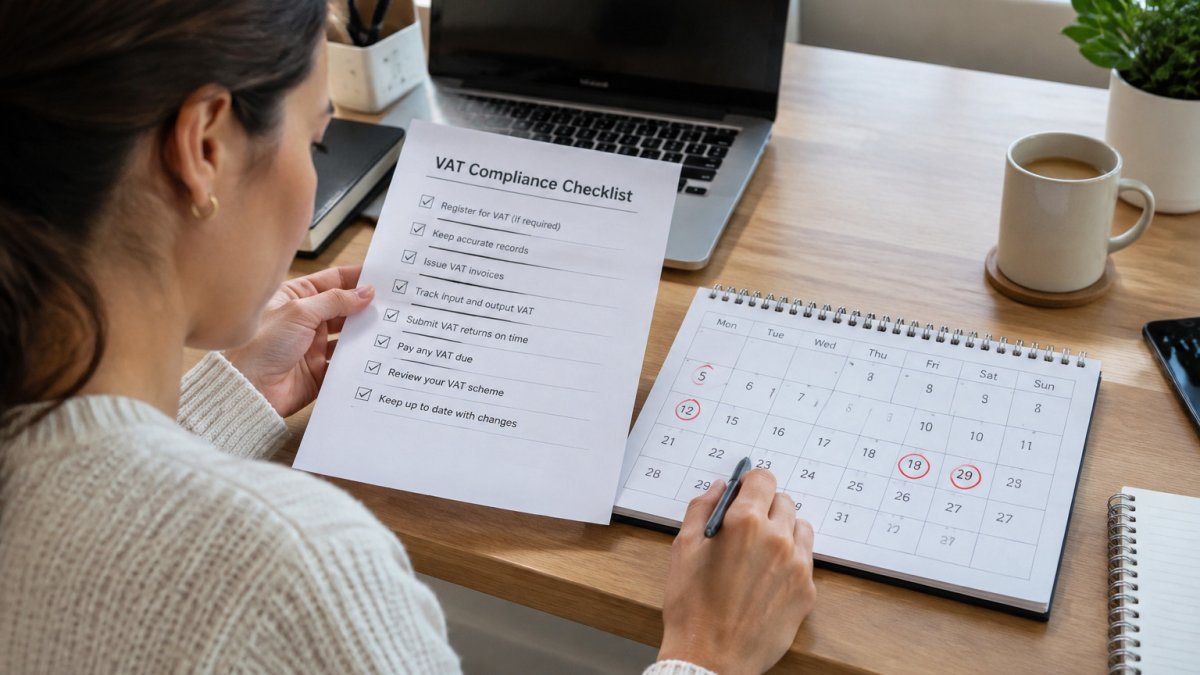
Keeping one shared calendar with every filing and payment deadline marked, and reviewing it each month, is a practical habit for most businesses. Learn more about managing cross-border VAT for online stores.
The recurring duties a VAT compliance checklist keeps visible are summarised below.
| Duty | What it covers | Frequency |
|---|---|---|
| Registration status | Whether you need to be registered | Reviewed regularly |
| Invoice requirements | What each invoice must contain | Every sale |
| Record-keeping | Records of sales and purchases | Ongoing |
| Returns and payments | Dates set by Revenue | Per Revenue deadlines |
| Deadline calendar | All filings and payments marked | Reviewed monthly |
Starting Work With a VAT Accountant or Ecstacybliss
If you decide to get help, start by describing your sales model, where your customers are, and whether you already hold a VAT number. See how the services are organised and which one fits your VAT situation. A VAT accountant can confirm your obligations, while Ecstacybliss handles company formation, VAT registration and store setup.
Ask any provider exactly which tasks are included, who is responsible if a filing is wrong, and how your data is stored. Clear answers to these questions are worth having before you commit.
If you are ready to take the next step, you can get started with Ecstacybliss via the website.
Frequently Asked Questions
What does professional VAT compliance support include?
Professional VAT compliance support usually covers VAT registration with Revenue, advice on which VAT rate applies to your products or services, preparing and filing VAT returns on time, and keeping VAT-compliant invoices and records. Some providers also review past returns for errors. Ask for a written list of what is included before you sign up, so you know exactly which tasks are covered and which are extra. Fees vary with the size and complexity of your business, so request a quote from Ecstacybliss for current pricing.
How often do VAT returns need to be filed?
In Ireland, most businesses file VAT returns on a bi-monthly, or every two months, cycle, though some are assigned other periods by Revenue. Each return must be filed and any VAT payment made by the deadline for that period, which is normally the 23rd day of the month after the period ends if you file electronically. Missing a deadline can lead to interest and penalties, so keeping a calendar of VAT filing deadlines is one of the simplest ways to protect your business.
Can an accountant help with VAT registration and returns?
Yes. A qualified accountant can help you register for VAT, decide whether registration is required, prepare your VAT returns, and check that your invoices and records meet Revenue requirements. Many accountants also handle correspondence with Revenue on your behalf. When choosing one, confirm they have experience with VAT for your type of business, ask how they will communicate with you, and agree in writing what each return will cost before work begins.
