
Last Updated: November 4, 2026
Quick Summary
Professional dropshipping setup services cost a one-time setup fee plus recurring platform, app, domain and maintenance expenses, and the total depends on scope. Compare the first-year total cost, including all add-ons, against the value of your own time and the risk of DIY mistakes.
- Add 12 months of recurring costs to the one-time fee to estimate your realistic first-year cost.
- Watch for add-ons for registration, design revisions and extra integrations hidden behind a low headline fee.
- Ask providers for a line-by-line quote and a clear supplier count, integration method and handover date.
- Supplier discovery and supplier integration are different jobs, so confirm whether each is priced separately.
- Confirm in writing who holds the supplier relationship and who owns your store data if you change platform.
Table of Contents
- What Professional Dropshipping Setup Services Actually Cost
- What Is Usually Included in a Setup Package
- Dropshipping Startup Costs: Setup Fees, Platform Fees and Domains
- Shopify Dropshipping Store Cost: Platform, Apps and Design
- Dropshipping Supplier Sourcing: Who Handles It and What It Costs
- DIY vs Professional Dropshipping Setup: A Cost and ROI Comparison
- Vetting a Setup Provider and Deciding Whether to Hire One
- Frequently Asked Questions
What Professional Dropshipping Setup Services Actually Cost
Hiring a provider for dropshipping setup services to build your store is a real budget decision, and the price depends on what you need built. For a step-by-step view of a done-for-you store setup, read our guide. Pricing for our services depends on scope, quantity and delivery timing, so the most accurate figures are on the Ecstacybliss pricing page at ecstacybliss.com.
Dropshipping is a business model where you sell products without holding stock. The supplier ships each order directly to your customer. Setup covers the store, the registration, the supplier connections and the marketing foundations that have to exist before the first sale.
One-time setup fees
One-time fees usually cover the work needed to launch: store configuration, theme setup, product import, payment connection and initial supplier linking. The exact amount varies with how much the provider builds from scratch versus adapts from a template. Ask any provider for a line-by-line quote so you can see what each EUR figure buys you.
Watch out: a low headline fee can hide add-ons for registration, design revisions or extra integrations. Compare the total cost to launch, not just the opening price.
Monthly recurring expenses
Recurring costs continue after launch and can matter as much over a year as the setup fee. They include your platform subscription, apps, domain renewal and hosting. Ongoing store maintenance and platform updates can also be a recurring cost, depending on the service agreement.
A simple way to test a quote is to add 12 months of recurring costs to the one-time fee. That gives you a realistic first-year cost to compare against your expected margins.
What Is Usually Included in a Setup Package
Setup packages are not one product, and the scope you choose changes both the price and what you remain responsible for after launch. You can see how store setup, registration, dropshipping and marketing are bundled into one team’s service. When comparing quotes, it helps to place each one against the scope it covers: the technical build only, the build plus compliance and supplier work, or ongoing automation after launch.
Watch out: a quote that lists ‘supplier connections’ without saying how many suppliers, which integrations, and who maintains them after launch is not a scope you can compare. Ask for the supplier count, the integration method and the handover date in writing.
Each element can be scoped to your situation, but the tier structure is what lets you see whether a low headline fee is genuinely basic or simply missing work you will pay for later.
Dropshipping Startup Costs: Setup Fees, Platform Fees and Domains
Your dropshipping startup costs generally fall into three groups: setup fees, platform fees and domain costs. Setup fees cover the build and launch work. Platform fees are the recurring charges for the e-commerce software that runs your store. Domain costs are the renewal for your web address.
Keep payment gateway fees and advertising budget in the same calculation. Both affect your profit margins from the first order onward.
Shopify Dropshipping Store Cost: Platform, Apps and Design
Shopify is one of the most widely used platforms for dropshipping. Its subscription sits at the core of the monthly cost, with apps and premium themes added on top. Apps can add up quickly, so list every app before you commit.
Design and custom development are the other variable. A ready-made theme keeps costs low, while custom store design and technical configuration cost more.
Dropshipping Supplier Sourcing: Who Handles It and What It Costs
Supplier sourcing is the step most DIY founders underestimate, and it is also the step where professional quotes vary most, because ‘sourcing’ means two different jobs. Supplier discovery is finding and vetting suppliers who can ship reliably, carry accurate stock and fulfil at a workable price. If you want suppliers already holding stock inside the EU, see how Dropship.EU connects your store to them. Supplier integration is the technical work of connecting those suppliers to your store so orders and inventory sync automatically. Providers often price these separately, and a quote that bundles them without saying so is hard to compare.
On the discovery side, a provider typically charges for the time to shortlist and test suppliers, and the cost scales with how many product lines you want covered. On the integration side, the cost depends on the method: a native app connection is cheaper than a custom API integration, and a custom integration is cheaper to build than to maintain. Ask which method the provider intends to use and who owns the integration if you change platform later.
Supplier vetting takes time, and a poor supplier can show up later as delayed orders and refund requests. A provider that sources on your behalf should be able to explain how it tests a supplier before recommending one, and what happens to your store data if you end the relationship.
Some founders use automation tools to sync inventory and orders themselves. Others pay a provider to handle both discovery and integration. Check each tool’s current pricing directly rather than relying on a bundled figure.
Watch out: a provider that will not name the suppliers it intends to use before you pay leaves you with little leverage if fulfilment goes wrong. Confirm in writing who holds the supplier relationship and whether you can take it with you.
DIY vs Professional Dropshipping Setup: A Cost and ROI Comparison
The real question is return on investment, not just the price tag. A DIY setup saves the fee but costs you hours, and those hours have value. Early mistakes in registration, VAT or supplier integration can also cost more to fix than the original setup would have.
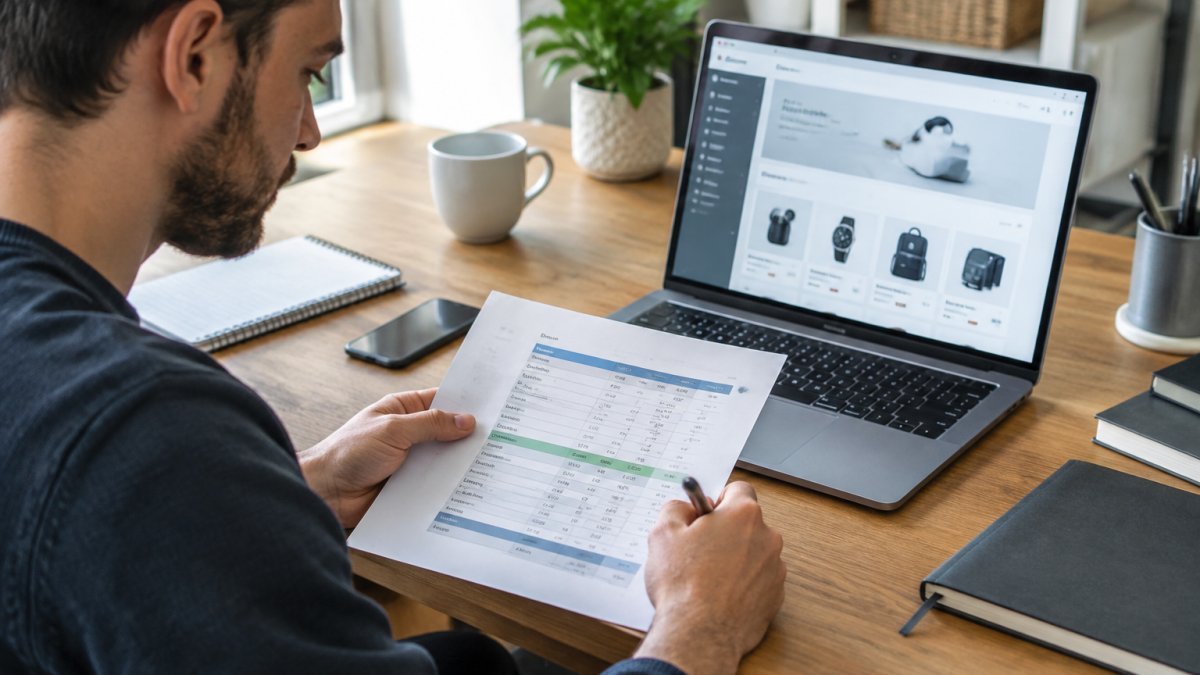
A professional setup can make sense when your time is better spent on sales, when you sell into the EU and need VAT handled correctly, or when you want the store live quickly. If you are comfortable learning the platform and have time to spare, DIY can work well for a single small store.
| Factor | DIY Setup | Professional Setup |
|---|---|---|
| Upfront cost | Lower | Higher, quoted per scope |
| Time to launch | Often weeks | Usually faster |
| Compliance risk | Your responsibility | Handled by provider |
| Ongoing maintenance | You manage it | Can be included |
Note that outcomes depend on your niche, product and marketing, so no setup choice guarantees sales.
Vetting a Setup Provider and Deciding Whether to Hire One
Before hiring any provider, ask what is included, who owns the store and data, and what happens if you change platform later. Check that the provider can show you working stores it has built. Ask how it handles VAT and company formation, and confirm who is accountable if paperwork goes wrong.
Ask direct questions about timelines too. Clear answers on how long a store takes to go live are worth more than any sales page. When you are ready to talk through your project, get in touch with our team and describe what you are building.
If you want a broader view of the costs involved, our guide to whether an accountant is needed for dropshipping covers the recurring expenses many founders overlook.
Frequently Asked Questions
How much does a professional dropshipping setup cost?
Professional setup pricing depends on the scope of work, the platform chosen, the number of products to be listed and the delivery timeline, so there is no single fixed figure that applies to every business. Costs typically split into a one-time setup fee and ongoing monthly expenses for platform subscriptions, apps and maintenance. The most reliable way to compare is to request written quotes that itemise each element, then check the current prices on the Ecstacybliss website for an accurate figure before budgeting.
What is usually included in a dropshipping store setup service?
A typical setup can cover company formation and VAT registration where relevant, and platform configuration on Shopify, WooCommerce or Amazon. Some providers also handle order processing and customer messages. Ask each provider to list exactly what is included and what is charged separately, since inclusions vary considerably between services.
Are there ongoing costs after a dropshipping store is set up?
Yes. Most stores carry recurring expenses such as the e-commerce platform subscription, domain renewal, hosting if not bundled, paid apps, payment processing fees and marketing spend. Post-launch maintenance, including platform updates and technical fixes, can also be an ongoing cost unless it is included in the service agreement. Budget for these monthly outgoings alongside the initial setup fee so they do not erode your margins.
Start My Store with Ecstacybliss to get a clear quote, a live store and the compliance work handled for you.
